How to transport a washing machine
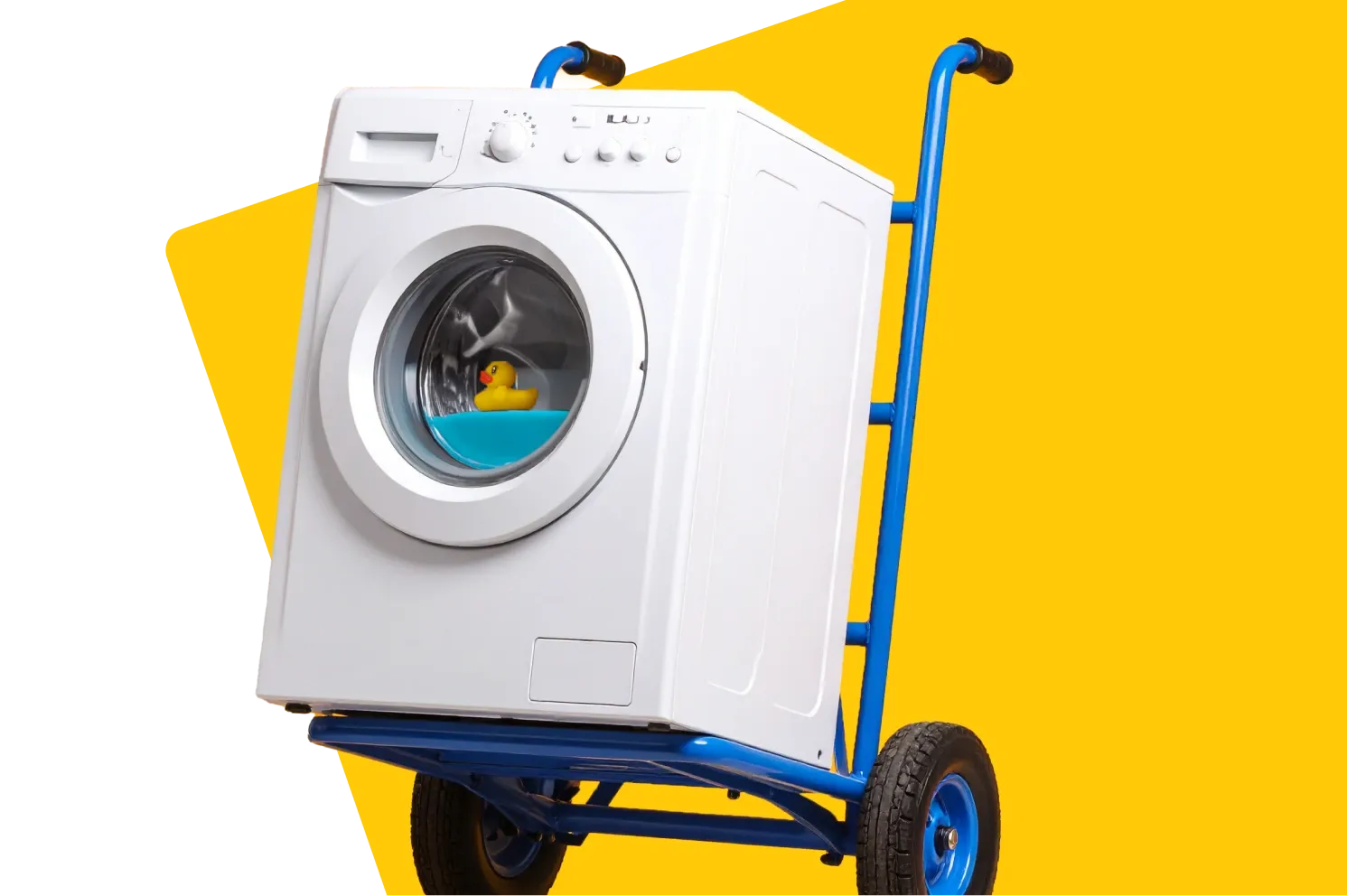
How to transport a washing machine
Moving a washing machine might sound simple in theory… until you’re halfway through and realise it weighs as much as a baby elephant and leaks.
Here's our guide to ensure you don't get yourself in a spin when moving your washing machine.
If you need to know how to move a washing machine safely, without breaking your back (or your floor), you’re in the right place.
Before you get started
What do you need to move a washing machine?
Before you go full steam ahead, make sure you’ve got the right gear. Moving a washing machine requires attention to detail and a bit of prep now will save you drama later on:
- Trolley or dolly – washing machines weigh 60kg to 105kg so a trolley is a must-have! This protects the floor, especially vinyl flooring, from damage by scraping the machine across the floor
- Rope or wire – you'll want this on hand to secure your washing machine into the back of your vehicle to keep it from sliding around
- Transit bolts – these small metal rods help keeps the drum still and stable during transport
If you use a professional moving service like AnyVan, the team should come ready with all the necessary equipment needed to move a washing machine, saving you time and hassle.
Quick, helpful tips for moving your washing machine
- Keep the door closed to stop it falling off and tape it shut for good measure
- Unplug and tape down the electrical cord to the back of the machine to avoid it getting tangled
- Use a trolley and have two people lift the machine onto the trolley
- Keep the machine upright to stop any residual water from damaging the electrics
- Use a blanket or towel and tie it to a trolley to keep the washing machine upright
How to disconnect a washing machine
When transporting a washing machine, the first step is usually the most difficult. Before you can move your washing machine from place to place, you have to deal with the murky waters of washing machine plumbing. You can disconnect and reconnect your washing machine to the plumbing yourself but if you're inexperienced it may be best to get a professional plumber involved.
If you choose to disconnect the washing machine yourself, the first thing you need to do is turn off its water using the valves. These are usually red and blue, located on a pipe on the wall behind the machine. Top tip, sometimes you can hear the water when you turn the valves, so listen out for this if you're unsure. Once the water is turned off you can then unplug the machine from the socket and secure the cable to it using tape.
Most washing machines leave about 500ml of water in the drum after each wash which you will need to drain. To do this, remove the drain hose from the drain and allow the excess water to run into a saucepan or bucket. Then tape the hose to the machine and you are ready to move it.
How to move a washing machine
When transporting a washing machine, it is best to use the original transit packaging or transit bolts that came with it to secure the drum. Instructions on assembling this will be found in the machine’s instruction booklet. If you haven't kept these (who has?!) that’s okay; just search Google or YouTube for a helpful tutorial on other methods. If you don't have a trolley then be extra careful to lift the machine safely and enlist a (strong) friend. Or, better yet, use professional movers like us!
Moving a washing machine short distances
If you are only moving your washing machine from one room to another, simply use the trolley to wheel it to its new destination. If you need to move it up or down some stairs you'll need someone else to help you – safety first, always! Lift the machine from the base, keeping it upright, and carry it up or down the stairs slowly and carefully. We suggest using a stair trolley if you can! If you're working with a removal expert make sure they bring the right trolley with them.
How to transport a washing machine with a vehicle
If you’re wondering if a washing machine will fit in your car, spoiler alert: probably not! If you rent a van to move it, you'll need to tie it down with ropes or ratchet straps to stop it sliding around. Make sure you also protect it, you can use soft furnishings like blankets.
Professional movers or courier services – like AnyVan – will load and unload it for you, with proper gear on hand to keep it safe en route. Why do the heavy lifting when you don't have to?
How to reconnect a washing machine
Now that you've moved your washing machine where you want it to live it's time to re-plumb the washing machine into the pipes in its new position. Again, if you are not confident, hire a professional plumber to help you out.
You'll need to reattach the valves, plug it in and run at least two test rinse cycles with no clothes inside to make sure it doesn’t leak, drains properly, and that it wasn’t damaged in the move.
Other checks depend on whether your drain hose is connected under the sink or pushed into another vertical standpipe;
- For a drain hose connected under the sink ensure there isn’t a run between the drain hose and washing machine as this can allow dirty water to enter the washing machine
- For a drain hose connected by another standpipe make sure the waste water pipe is vertical and don’t push the drain hose too deep into the wastewater pipe
After one or two test cycles, your washing machine will be ready for laundry once again!
Quick recap: our top five tips on how to move a washing machine
- Drain all leftover water before you move it
- Use a trolley or dolly – not your knees!
- Secure the drum with transit bolts or padding
- Keep the machine upright at all times
- Consider using professional movers to save yourself the hassle
The UK's favourite movers

The UK's favourite movers
If you’re still wondering “can I move a washing machine by myself?” the honest answer is… maybe, but we wouldn’t recommend it. Washing machines are heavy, awkward and full of fiddly bits. AnyVan movers deal with them every day and can help you find a specialist washing machine courier with experience and the right equipment – from just £26.
Last updated: 14th July 2026